
LABAN. White. (1.) The son of Bethuel, who was the son of Nahor, Abraham’s brother. He lived at Haran in Mesopotamia. His sister Rebekah was Isaac’s wife (Gen. 24). Jacob, one of the sons of this marriage, fled to the house of Laban, whose daughters Leah and Rachel (ch. 29) he eventually married. (2.) A city in the Arabian desert in the route of the Israelites (Deut. 1:1), probably identical with Libnah (Num. 33:20).
LACHISH. Impregnable, a royal Canaanitish city in the Shephelah, or maritime plain of Palestine (Josh. 10:3, 5; 12:11). It was taken and destroyed by the Israelites (Josh. 10:31-33). It afterwards became, under Rehoboam, one of the strongest fortresses of Judah (2 Chr. 10:9). It was assaulted and probably taken by Sennacherib (2 Kings 18:14, 17; 19:8; Isa. 36:2). An account of this siege is given on some slabs found in the chambers of the palace of Koyunjik, and now in the British Museum. The inscription has been deciphered as follows:, “Sennacherib, the mighty king, king of the country of Assyria, sitting on the throne of judgment before the city of Lachish: I gave permission for its slaughter.” Lachish has been identified with Tell-el-Hesy, where a cuneiform tablet has been found, containing a letter supposed to be from Amenophis at Amarna in reply to one of the Amarna tablets sent by Zimrida from Lachish. This letter is from the chief of Atim (=Etam, 1 Chr. 4:32) to the chief of Lachish, in which the writer expresses great alarm at the approach of marauders from the Hebron hills. “They have entered the land,” he says, “to lay waste…strong is he who has come down. He lays waste.” This letter shows that “the communication by tablets in cuneiform script was not only usual in writing to Egypt, but in the internal correspondence of the country. The letter, though not so important in some ways as the Moabite stone and the Siloam text, is one of the most valuable discoveries ever made in Palestine” (Conder’s Tell Amarna Tablets, p. 134). Excavations at Lachish are still going on, and among other discoveries is that of an iron blast-furnace, with slag and ashes, which is supposed to have existed B.C. 1500. If the theories of experts are correct, the use of the hot-air blast instead of cold air (an improvement in iron manufacture patented by Neilson in 1828) was known fifteen hundred years before Christ.
LAISH. A lion. (1.) A city of the Sidonians, in the extreme north of Palestine (Judg. 18:7, 14); called also Leshem (Josh. 19:47) and Dan (Judg. 18:7, 29; Jer. 8:16). It lay near the sources of the Jordan, about 4 miles from Paneas. The restless and warlike tribe of Dan (q.v.), looking out for larger possessions, invaded this country and took Laish with its territory. It is identified with the ruin Tell-el-Kady, “the mound of the judge,” to the north of the Waters of Merom (Josh. 11:5). (2.) A place mentioned in Isa. 10:30. It has been supposed to be the modern el-Isawiyeh, about a mile north-east of Jerusalem. (3.) The father of Phalti (1 Sam. 25:44).
LAMA. (Matt. 27:46), a Hebrew word meaning why, quoted from Ps. 22:1.
LAMECH. The strikerdown; the wild man. (1.) The fifth in descent from Cain. He was the first to violate the primeval ordinance of marriage (Gen. 4:18-24). His address to his two wives, Adah and Zillah (4:23, 24), is the only extant example of antediluvian poetry. It has been called “Lamech’s sword-song.” He was “rude and ruffianly,” fearing neither God nor man. With him the curtain falls on the race of Cain. We know nothing of his descendants. (2.) The seventh in descent from Seth, being the only son of Methuselah. Noah was the oldest of his several sons (Gen. 5:25-31; Luke 3:36).
LAMENTATION. (Heb. qinah), an elegy or dirge. The first example of this form of poetry is the lament of David over Saul and Jonathan (2 Sam. 1:17-27). It was a frequent accompaniment of mourning (Amos 8:10). In 2 Sam. 3:33, 34 is recorded David’s lament over Abner. Prophecy sometimes took the form of a lament when it predicted calamity (Ezek. 27:2, 32; 28:12; 32:2, 16).
LAMENTATIONS, BOOK OF. Called in the Hebrew canon ’Ekhah, meaning “How,” being the formula for the commencement of a song of wailing. It is the first word of the book (see 2 Sam. 1:19-27). The LXX. adopted the name rendered “Lamentations” (Gr. threnoi = Heb. qinoth) now in common use, to denote the character of the book, in which the prophet mourns over the desolations brought on the city and the holy land by Chaldeans. In the Hebrew Bible it is placed among the Khethubim. As to its authorship, there is no room for hesitancy in following the LXX. and the Targum in ascribing it to Jeremiah. The spirit, tone, language, and subject-matter are in accord with the testimony of tradition in assigning it to him. According to tradition, he retired after the destruction of Jerusalem by Nebuchadnezzar to a cavern outside the Damascus gate, where he wrote this book. That cavern is still pointed out. “In the face of a rocky hill, on the western side of the city, the local belief has placed ‘the grotto of Jeremiah.’ There, in that fixed attitude of grief which Michael Angelo has immortalized, the prophet may well be supposed to have mourned the fall of his country” (Stanley, Jewish Church). The book consists of five separate poems. In chapter 1 the prophet dwells on the manifold miseries oppressed by which the city sits as a solitary widow weeping sorely. In chapter 2 these miseries are described in connection with the national sins that had caused them. Chapter 3 speaks of hope for the people of God. The chastisement would only be for their good; a better day would dawn for them. Chapter 4 laments the ruin and desolation that had come upon the city and temple, but traces it only to the people’s sins. Chapter 5 is a prayer that Zion’s reproach may be taken away in the repentance and recovery of the people. The first four poems (chapters) are acrostics, like some of the Psalms (25, 34, 37, 119), i.e., each verse begins with a letter of the Hebrew alphabet taken in order. The first, second, and fourth have each twenty-two verses, the number of the letters in the Hebrew alphabet. The third has sixty-six verses, in which each three successive verses begin with the same letter. The fifth is not acrostic. Speaking of the “Wailing-place (q.v.) of the Jews” at Jerusalem, a portion of the old wall of the temple of Solomon, Schaff says: “There the Jews assemble every Friday afternoon to bewail the downfall of the holy city, kissing the stone wall and watering it with their tears. They repeat from their well-worn Hebrew Bibles and prayer-books the Lamentations of Jeremiah and suitable Psalms.”
LAMP. (1.) That part of the candle-sticks of the tabernacle and the temple which bore the light (Ex. 25:37; 1 Kings 7:49; 2 Chr. 4:20; 13:11; Zech. 4:2). Their form is not described. Olive oil was generally burned in them (Ex. 27:20). (2.) A torch carried by the soliders of Gideon (Judg. 7:16, 20). (R.V., “torches.”) (3.) Domestic lamps (A.V., “candles”) were in common use among the Hebrews (Matt. 5:15; Mark 4:21, etc.). (4.) Lamps or torches were used in connection with marriage ceremonies (Matt. 25:1). This word is also frequently metaphorically used to denote life, welfare, guidance, etc. (2 Sam. 21:17; Ps. 119:105; Prov. 6:23; 13:9).
LAODICEA. The city of this name mentioned in Scripture lay on the confines of Phrygia and Lydia, about 40 miles east of Ephesus (Rev. 3:14), on the banks of the Lycus. It was originally called Diospolis and then Rhoas, but afterwards Laodicea, from Laodice, the wife of Antiochus II., king of Syria, who rebuilt it. It was one of the most important and flourishing cities of Asia Minor. At a very early period it became one of the chief seats of Christianity (Col. 2:1; 4:15; Rev. 1:11, etc.). It is now a deserted place, called by the Turks Eski-hissar or “old castle.”
LAODICEA, EPISTLE FROM. (Col. 4:16), was probably the Epistle to the Ephesians, as designed for general circulation. It would reach the Colossians by way of Laodicea.
LAPIDOTH. Torches. Deborah is called “the wife of Lapidoth” (Judg. 4:4). Some have rendered the expression “a woman of a fiery spirit,” under the supposition that Lapidoth is not a proper name, a woman of a torch-like spirit.
LASAEA. A city in the island of Crete (Acts 27:8). Its ruins are still found near Cape Leonda, about 5 miles east of “Fair Havens.”
LASHA. Fissure, a place apparently east of the Dead Sea (Gen. 10:19). It was afterwards known as Callirhoe, a place famous for its hot springs.
LATIN. The vernacular language of the ancient Romans (John 19:20).
LAW. A rule of action. (1.) The Law of Nature is the will of God as to human conduct, founded on the moral difference of things, and discoverable by natural light (Rom. 1:20; 2:14, 15). This law binds all men at all times. It is generally designated by the term conscience, or the capacity of being influenced by the moral relations of things. (2.) The Ceremonial Law prescribes under the Old Testament the rites and ceremonies of worship. This law was obligatory only till Christ, of whom these rites were typical, had finished his work (Heb. 7:9, 11; 10:1; Eph. 2:16). It was fulfilled rather than abrogated by the gospel. (3.) The Judicial Law, the law which directed the civil policy of the Hebrew nation. (4.) The Moral Law is the revealed will of God as to human conduct, binding on all men to the end of time. It was promulgated at Sinai. It is perfect (Ps. 19:7), perpetual (Matt. 5:17, 18), holy (Rom. 7:12), good, spiritual (14), and exceeding broad (Ps. 119:96). Although binding on all, we are not under it as a covenant of works (Gal. 3:17). (5.) Positive Laws are precepts founded only on the will of God. They are right because God commands them. (6.) Moral positive laws are commanded by God because they are right.
LAW OF MOSES. Is the whole body of the Mosaic legislation (1 Kings 2:3; 2 Kings 23:25; Ezra 3:2). It is called by way of eminence simply “the Law” (Heb. Torah, Deut. 1:5; 4:8, 44; 17:18, 19; 27:3, 8). As a written code it is called the “book of the law of Moses” (2 Kings 14:6; Isa. 8:20), the “book of the law of God” (Josh. 24:26). The great leading principle of the Mosaic law is that it is essentially theocratic; i.e., it refers at once to the commandment of God as the foundation of all human duty.
LAZARUS. An abbreviation of Eleazar, whom God helps. (1.) The brother of Mary and Martha of Bethany. He was raised from the dead after he had lain four days in the tomb (John 11:1-44). This miracle so excited the wrath of the Jews that they sought to put both Jesus and Lazarus to death. (2.) A beggar named in the parable recorded Luke 16:19-31.
LEAH. Weary, the eldest daughter of Laban, and sister of Rachel (Gen. 29:16). Jacob took her to wife through a deceit of her father (Gen. 29:23). She was “tender-eyed” (17). She bore to Jacob six sons (32-35), also one daughter, Dinah (30:21). She accompanied Jacob into Canaan, and died there before the time of the going down into Egypt (Gen. 31), and was buried in the cave of Machpelah (49:31).
 LEAVEN. (1.) Heb. seor (Ex. 12:15, 19; 13:7; Lev. 2:11), the remnant of dough from the preceding baking which had fermented and become acid. (2.) Heb. hamets, properly “ferment.” In Num. 6:3, “vinegar of wine” is more correctly “fermented wine.” In Ex. 13:7, the proper rendering would be, “Unfermented things [Heb. matstsoth] shall be consumed during the seven days; and there shall not be seen with thee fermented things [hamets], and there shall not be seen with thee leavened mass [seor] in all thy borders.” The chemical definition of ferment or yeast is “a substance in a state of putrefaction, the atoms of which are in a continual motion.” The use of leaven was strictly forbidden in all offerings made to the Lord by fire (Lev. 2:11; 7:12; 8:2; Num. 6:15). Its secretly penetrating and diffusive power is referred to in 1 Cor. 5:6. In this respect it is used to illustrate the growth of the kingdom of heaven both in the individual heart and in the world (Matt. 13:33). It is a figure also of corruptness and of perverseness of heart and life (Matt. 16:6, 11; Mark 8:15; 1 Cor. 5:7, 8).
LEBANON. White, “the white mountain of Syria,” is the loftiest and most celebrated mountain range in Syria. It is a branch running southward from the Caucasus, and at its lower end forking into two parallel ranges, the eastern or Anti-Lebanon, and the western or Lebanon proper. They enclose a long valley (Josh. 11:17) of from 5 to 8 miles in width, called by Roman writers Coele-Syria, now called el-Buka’a, “the valley,” a prolongation of the valley of the Jordan. Lebanon proper, Jebel es-Sharki, commences at its southern extremity in the gorge of the Leontes, the ancient Litany, and extends north-east, parallel to the Mediterranean coast, as far as the river Eleutherus, at the plain of Emesa, “the entering of Hamath” (Num. 34:8; 1 Kings 8:65), in all about 90 geographical miles in extent. The average height of this range is from 6,000 to 8,000 feet; the peak of Jebel Mukhmel is about 10,200 feet, and the Sannin about 9,000. The highest peaks are covered with perpetual snow and ice. In the recesses of the range wild beasts as of old still abound (2 Kings 14:9; Cant. 4:8). The scenes of the Lebanon are remarkable for their grandeur and beauty, and supplied the sacred writers with many expressive similes (Ps. 29:5, 6; 72:16; 104:16-18; Cant. 4:15; Isa. 2:13; 35:2; 60:13; Hos. 14:5). It is famous for its cedars (Cant. 5:15), its wines (Hos. 14:7), and its cool waters (Jer. 18:14). The ancient inhabitants were Giblites and Hivites (Josh. 13:5; Judg. 3:3). It was part of the Phoenician kingdom (1 Kings 5:2-6). The eastern range, or Anti-Lebanon, or “Lebanon towards the sunrising,” runs nearly parallel with the western from the plain of Emesa till it connects with the hills of Galilee in the south. The height of this range is about 5,000 feet. Its highest peak is Hermon (q.v.), from which a number of lesser ranges radiate. Lebanon is first mentioned in the description of the boundary of Palestine (Deut. 1:7; 11:24). It was assigned to Israel, but was never conquered (Josh. 13:2-6; Judg. 3:1-3). The Lebanon range is now inhabited by a population of about 300,000 Christians, Maronites, and Druses, and is ruled by a Christian governor. The Anti-Lebanon is inhabited by Mohammedans, and is under a Turkish ruler.
LEBONAH. Frankincense, a town near Shiloh, on the north side of Bethel (Judg. 21:19). It has been identified with el-Lubban, to the south of Nablus.
LEGION. A regiment of the Roman army, the number of men composing which differed at different times. It originally consisted of three thousand men, but in the time of Christ consisted of six thousand, exclusive of horsemen, who were in number a tenth of the foot-men. The word is used (Matt. 26:53; Mark 5:9) to express simply a great multitude.
LEHI. A jawbone, a place in the tribe of Judah where Samson achieved a victory over the Philistines (Judg. 15:9, 14, 16), slaying a thousand of them with the jawbone of an ass. The words in 15:19, “a hollow place that was in the jaw” (A.V.), should be, as in Revised Version, “the hollow place that is in Lehi.”
LEMUEL. Dedicated to God, a king whom his mother instructed (Prov. 31:1-9). Nothing is certainly known concerning him. The rabbis identified him with Solomon.
LEUMMIM. Peoples; nations, the last mentioned of the three sons of Dedan, and head of an Arabian tribe (Gen. 25:3).
LEVI. Adhesion. (1.) The third son of Jacob by Leah. The origin of the name is found in Leah’s words (Gen. 29:34), “This time will my husband be joined [Heb. yillaveh] unto me.” He is mentioned as taking a prominent part in avenging his sister Dinah (Gen. 34:25-31). He and his three sons went down with Jacob (46:11) into Egypt, where he died at the age of one hundred and thirty-seven years (Ex. 6:16). (2.) The father of Matthat, and son of Simeon, of the ancestors of Christ (Luke 3:29). (3.) Luke 3:24. (4.) One of the apostles, the son of Alphaeus (Mark 2:14; Luke 5:27, 29), called also Matthew (Matt. 9:9).
LEVITE. A descendant of the tribe of Levi (Ex. 6:25; Lev. 25:32; Num. 35:2; Josh. 21:3, 41). This name is, however, generally used as the title of that portion of the tribe which was set apart for the subordinate offices of the sanctuary service (1 Kings 8:4; Ezra 2:70), as assistants to the priests. When the Israelites left Egypt, the ancient manner of worship was still observed by them, the eldest son of each house inheriting the priest’s office. At Sinai the first change in this ancient practice was made. A hereditary priesthood in the family of Aaron was then instituted (Ex. 28:1). But it was not till that terrible scene in connection with the sin of the golden calf that the tribe of Levi stood apart and began to occupy a distinct position (Ex. 32). The religious primogeniture was then conferred on this tribe, which henceforth was devoted to the service of the sanctuary (Num. 3:11-13). They were selected for this purpose because of their zeal for the glory of God (Ex. 32:26), and because, as the tribe to which Moses and Aaron belonged, they would naturally stand by the lawgiver in his work. The Levitical order consisted of all the descendants of Levi’s three sons, Gershon, Kohath, and Merari; whilst Aaron, Amram’s son (Amram, son of Kohat), and his issue constituted the priestly order. The age and qualification for Levitical service are specified in Num. 4:3, 23, 30, 39, 43, 47. They were not included among the armies of Israel (Num. 1:47; 2:33; 26:62), but were reckoned by themselves. They were the special guardians of the tabernacle (Num. 1:51; 18:22-24). The Gershonites pitched their tents on the west of the tabernacle (3:23), the Kohathites on the south (3:29), the Merarites on the north (3:35), and the priests on the east (3:38). It was their duty to move the tent and carry the parts of the sacred structure from place to place. They were given to Aaron and his sons the priests to wait upon them and do work for them at the sanctuary services (Num. 8:19; 18:2-6). As being wholly consecrated to the service of the Lord, they had no territorial possessions. Jehovah was their inheritance (Num. 18:20; 26:62; Deut. 10:9; 18:1, 2), and for their support it was ordained that they should receive from the other tribes the tithes of the produce of the land. Forty-eight cities also were assigned to them, thirteen of which were for the priests “to dwell in”, i.e., along with their other inhabitants. Along with their dwellings they had “suburbs”, i.e., “commons”, for their herds and flocks, and also fields and vineyards (Num. 35:2-5). Nine of these cities were in Judah, three in Naphtali, and four in each of the other tribes (Josh. 21). Six of the Levitical cities were set apart as “cities of refuge” (q.v.). Thus the Levites were scattered among the tribes to keep alive among them the knowledge and service of God.
LEVITICUS. The third book of the Pentateuch; so called in the Vulgate, after the LXX., because it treats chiefly of the Levitical service. In the first section of the book (1-17), which exhibits the worship itself, there is, (1.) A series of laws (1-7) regarding sacrifices, burnt-offerings, meat-offerings, and thank-offerings (1-3), sin-offerings and trespass-offerings (4; 5), followed by the law of the priestly duties in connection with the offering of sacrifices (6; 7). (2.) An historical section (8-10), giving an account of the consecration of Aaron and his sons (8); Aaron’s first offering for himself and the people (9); Nadab and Abihu’s presumption in offering “strange fire before Jehovah,” and their punishment (10). (3.) Laws concerning purity, and the sacrifices and ordinances for putting away impurity (11-16). An interesting fact may be noted here. Canon Tristram, speaking of the remarkable discoveries regarding the flora and fauna of the Holy Land by the Palestine Exploration officers, makes the following statement:, “Take these two catalogues of the clean and unclean animals in the books of Leviticus [11] and Deuteronomy [14]. There are eleven in Deuteronomy which do not occur in Leviticus, and these are nearly all animals and birds which are not found in Egypt or the Holy Land, but which are numerous in the Arabian desert. They are not named in Leviticus a few weeks after the departure from Egypt; but after the people were thirty-nine years in the desert they are named, a strong proof that the list in Deuteronomy was written at the end of the journey, and the list in Leviticus at the beginning. It fixes the writing of that catalogue to one time and period only, viz., that when the children of Israel were familiar with the fauna and the flora of the desert” (Palest. Expl. Quart., Jan. 1887). (4.) Laws marking the separation between Israel and the heathen (17-20). (5.) Laws about the personal purity of the priests, and their eating of the holy things (20; 21); about the offerings of Israel, that they were to be without blemish (22:17-33); and about the due celebration of the great festivals (23; 25). (6.) Then follow promises and warnings to the people regarding obedience to these commandments, closing with a section on vows. The various ordinances contained in this book were all delivered in the space of a month (comp. Ex. 40:17; Num. 1:1), the first month of the second year after the Exodus. It is the third book of Moses. No book contains more of the very words of God. He is almost throughout the whole of it the direct speaker. This book is a prophecy of things to come, a shadow whereof the substance is Christ and his kingdom. The principles on which it is to be interpreted are laid down in the Epistle to the Hebrews. It contains in its complicated ceremonial the gospel of the grace of God.
LEVY. (1 Kings 4:6, R.V.; 5:13), forced service. The service of tributaries was often thus exacted by kings. Solomon raised a “great levy” of 30,000 men, about two per cent. of the population, to work for him by courses on Lebanon. Adoram (12:18) presided over this forced labour service (Ger. Frohndienst; Fr. corvee).
LIBERTINE. Found only Acts 6:9, one who once had been a slave, but who had been set at liberty, or the child of such a person. In this case the name probably denotes those descendants of Jews who had been carried captives to Rome as prisoners of war by Pompey and other Roman generals in the Syrian wars, and had afterwards been liberated. In A.D. 19 these manumitted Jews were banished from Rome. Many of them found their way to Jerusalem, and there established a synagogue.
LIBNAH. Transparency; whiteness. (1.) One of the stations of the Israelites in the wilderness (Num. 33:20, 21). (2.) One of the royal cities of the Canaanites taken by Joshua (Josh. 10:29-32; 12:15). It became one of the Levitical towns in the tribe of Judah (21:13), and was strongly fortified. Sennacherib laid siege to it (2 Kings 19:8; Isa. 37:8). It was the native place of Hamutal, the queen of Josiah (2 Kings 23:31). It stood near Lachish, and has been identified with the modern Arak el-Menshiyeh.
LIBNI. White, one of the two sons of Gershon, the son of Levi (Ex. 6:17; Num. 3:18, 21).
LIBYA. The country of the Ludim (Gen. 10:13), Northern Africa, a large tract lying along the Mediterranean, to the west of Egypt (Acts 2:10). Cyrene was one of its five cities.
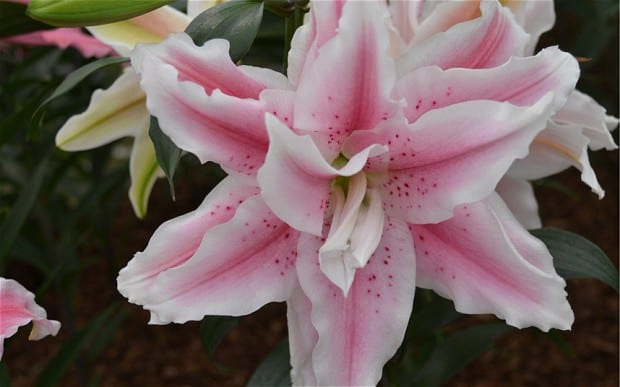 LILY. The Hebrew name shushan or shoshan, i.e., “whiteness”, was used as the general name of several plants common to Syria, such as the tulip, iris, anemone, gladiolus, ranunculus, etc. Some interpret it, with much probability, as denoting in the Old Testament the water-lily (Nymphoea lotus of Linn.), or lotus (Cant. 2:1, 2; 2:16; 4:5; 5:13; 6:2, 3; 7:2). “Its flowers are large, and they are of a white colour, with streaks of pink. They supplied models for the ornaments of the pillars and the molten sea” (1 Kings 7:19, 22, 26; 2 Chr. 4:5). In the Canticles its beauty and fragrance shadow forth the preciousness of Christ to the Church. Groser, however (Scrip. Nat. Hist.), strongly argues that the word, both in the Old and New Testaments, denotes liliaceous plants in general, or if one genus is to be selected, that it must be the genus Iris, which is “large, vigorous, elegant in form, and gorgeous in colouring.” The lilies (Gr. krinia) spoken of in the
  New Testament (Matt. 6:28; Luke 12:27) were probably the scarlet martagon (Lilium Chalcedonicum) or “red Turk’s-cap lily”, which “comes into flower at the season of the year when our Lord’s sermon on the mount is supposed to have been delivered. It is abundant in the district of Galilee; and its fine scarlet flowers render it a very conspicous and showy object, which would naturally attract the attention of the hearers” (Balfour’s Plants of the Bible). Of the true “floral glories of Palestine” the pheasant’s eye (Adonis Palestina), the ranunuculus (R. Asiaticus), and the anemone (A coronaria), the last named is however, with the greatest probability regarded as the “lily of the field” to which our Lord refers. “Certainly,” says Tristram (Nat. Hist. of the Bible), “if, in the wondrous richness of bloom which characterizes the land of Israel in spring, any one plant can claim pre-eminence, it is the anemone, the most natural flower for our Lord to pluck and seize upon as an illustration, whether walking in the fields or sitting on the hill-side.” “The white water-lily (Nymphcea alba) and the yellow water-lily (Nuphar lutea) are both abundant in the marshes of the Upper Jordan, but have no connection with the lily of Scripture.”
LINEN. (1.) Heb., pishet, pishtah, denotes “flax,” of which linen is made (Isa. 19:9); wrought flax, i.e., “linen cloth”, Lev. 13:47, 48, 52, 59; Deut. 22:11. Flax was early cultivated in Egypt (Ex. 9:31), and also in Palestine (Josh. 2:6; Hos. 2:9). Various articles were made of it: garments (2 Sam. 6:14), girdles (Jer. 13:1), ropes and thread (Ezek. 40:3), napkins (Luke 24:12; John 20:7), turbans (Ezek. 44:18), and lamp-wicks (Isa. 42:3). (2.) Heb. buts, “whiteness;” rendered “fine linen” in 1 Chr. 4:21; 15:27; 2 Chr. 2:14; 3:14; Esther 1:6; 8:15, and “white linen” 2 Chr. 5:12. It is not certain whether this word means cotton or linen. (3.) Heb. bad; rendered “linen” Ex. 28:42; 39:28; Lev. 6:10; 16:4, 23, 32; 1 Sam. 2:18; 2 Sam. 6:14, etc. It is uniformly used of the sacred vestments worn by the priests. The word is from a root signifying “separation.” (4.) Heb. shesh; rendered “fine linen” Ex. 25:4; 26:1, 31, 36, etc. In Prov. 31:22 it is rendered in Authorized Version “silk,” and in Revised Version “fine linen.” The word denotes Egyptian linen of peculiar whiteness and fineness (byssus). The finest Indian linen, the finest now made, has in an inch one hundred threads of warp and eighty-four of woof; while the Egyptian had sometimes one hundred and forty in the warp and sixty-four in the woof. This was the usual dress of the Egyptian priest. Pharaoh arrayed Joseph in a dress of linen (Gen. 41:42). (5.) Heb. ‘etun. Prov. 7:16, “fine linen of Egypt;” in Revised Version, “the yarn of Egypt.” (6.) Heb. sadin. Prov. 31:24, “fine linen;” in Revised Version, “linen garments” (Judg. 14:12, 13; Isa. 3:23). From this Hebrew word is probably derived the Greek word sindon, rendered “linen” in Mark 14:51, 52; 15:46; Matt. 27:59. The word “linen” is used as an emblem of moral purity (Rev. 15:6). In Luke 16:19 it is mentioned as a mark of luxury.
LITTER. (Heb. tsab, as being lightly and gently borne), a sedan or palanquin for the conveyance of persons of rank (Isa. 66:20). In Num. 7:3, the words “covered wagons” are more literally “carts of the litter kind.” There they denote large and commodious vehicles drawn by oxen, and fitted for transporting the furniture of the temple.
LIVING CREATURES. As represented by Ezekiel (1-10) and John (Rev. 4, etc.), are the cherubim. They are distinguished from angels (Rev. 15:7); they join the elders in the “new song” (5:8, 9); they warn of danger from divine justice (Isa. 6:3-5), and deliver the commission to those who execute it (Ezek. 10:2, 7); they associate with the elders in their sympathy with the hundred and forty-four thousand who sing the new song (Rev. 14:3), and with the Church in the overthrow of her enemies (19:4). They are supposed to represent mercy, as distinguished from justice, mercy in its various instrumentalities, and especially as connected with the throne of God, the “throne of grace.”
LO-AMMI. Not my people, a symbolical name given by God’s command to Hosea’s second son in token of Jehovah’s rejection of his people (Hos. 1:9, 10), his treatment of them as a foreign people. This Hebrew word is rendered by “not my people” in ver. 10; 2:23.
LOAN. The Mosaic law required that when an Israelite needed to borrow, what he asked was to be freely lent to him, and no interest was to be charged, although interest might be taken of a foreigner (Ex. 22:25; Deut. 23:19, 20; Lev. 25:35-38). At the end of seven years all debts were remitted. Of a foreigner the loan might, however, be exacted. At a later period of the Hebrew commonwealth, when commerce increased, the practice of exacting usury or interest on loans, and of suretiship in the commercial sense, grew up. Yet the exaction of it from a Hebrew was regarded as discreditable (Ps. 15:5; Prov. 6:1, 4; 11:15; 17:18; 20:16; 27:13; Jer. 15:10). Limitations are prescribed by the law to the taking of a pledge from the borrower. The outer garment in which a man slept at night, if taken in pledge, was to be returned before sunset (Ex. 22:26, 27; Deut. 24:12, 13). A widow’s garment (Deut. 24:17) and a millstone (6) could not be taken. A creditor could not enter the house to reclaim a pledge, but must remain outside till the borrower brought it (10, 11). The Hebrew debtor could not be retained in bondage longer than the seventh year, or at farthest the year of jubilee (Ex. 21:2; Lev. 25:39, 42), but foreign sojourners were to be “bondmen for ever” (Lev. 25:44-54).
LO-DEBAR. No pasture, (2 Sam. 17:27), a town in Gilead not far from Mahanaim, north of the Jabbok (9:4, 5). It is probably identical with Debir (Josh. 13:26).
LOIS. The maternal grandmother of Timothy. She is commended by Paul for her faith (2 Tim. 1:5).
LORD’S DAY. Only once, in Rev. 1:10, was in the early Christian ages used to denote the first day of the week, which commemorated the Lord’s resurrection. There is every reason to conclude that John thus used the name.
LORD’S PRAYER. The name given to the only form of prayer Christ taught his disciples (Matt. 6:9-13). The closing doxology of the prayer is omitted by Luke (11:2-4), also in the R.V. of Matt. 6:13. This prayer contains no allusion to the atonement of Christ, nor to the offices of the Holy Spirit. “All Christian prayer is based on the Lord’s Prayer, but its spirit is also guided by that of His prayer in Gethsemane and of the prayer recorded John 17. The Lord’s Prayer is the comprehensive type of the simplest and most universal prayer.”
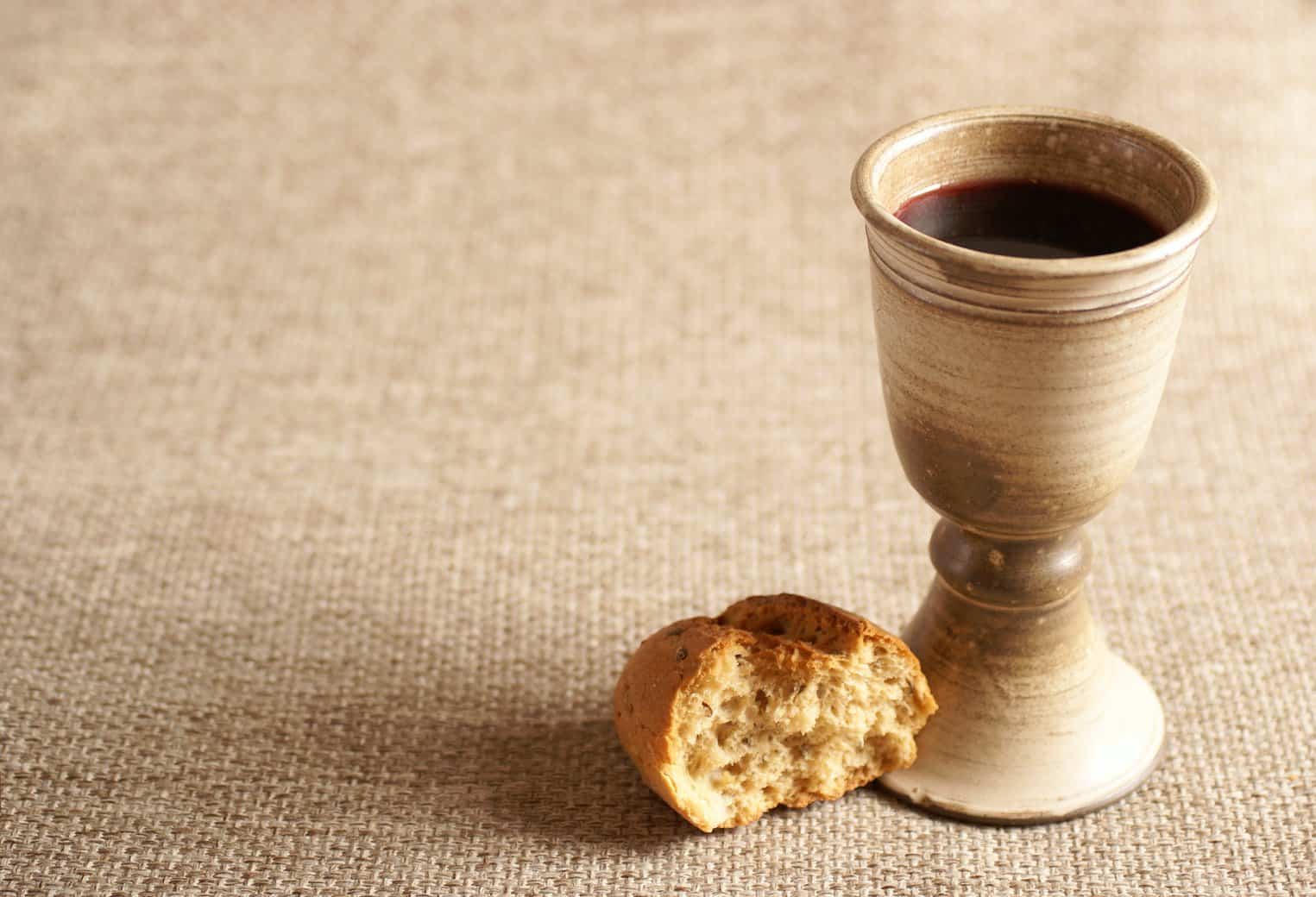 LORD’S SUPPER. (1 Cor. 11:20), called also “the Lord’s table” (10:21), “communion,” “cup of blessing” (10:16), and “breaking of bread” (Acts 2:42). In the early Church it was called also “eucharist,” or giving of thanks (comp. Matt. 26:27), and generally by the Latin Church “mass,” a name derived from the formula of dismission, Ite, missa est, i.e., “Go, it is discharged.” The account of the institution of this ordinance is given in Matt. 26:26-29, Mark 14:22-25, Luke 22:19, 20, and 1 Cor. 11:24-26. It is not mentioned by John. It was designed, (1.) To commemorate the death of Christ: “This do in remembrance of me.” (2.) To signify, seal, and apply to believers all the benefits of the new covenant. In this ordinance Christ ratifies his promises to his people, and they on their part solemnly consecrate themselves to him and to his entire service. (3.) To be a badge of the Christian profession. (4.) To indicate and to promote the communion of believers with Christ. (5.) To represent the mutual communion of believers with each other. The elements used to represent Christ’s body and blood are bread and wine. The kind of bread, whether leavened or unleavened, is not specified. Christ used unleavened bread simply because it was at that moment on the paschal table. Wine, and no other liquid, is to be used (Matt. 26:26-29). Believers “feed” on Christ’s body and blood, (1) not with the mouth in any manner, but (2) by the soul alone, and (3) by faith, which is the mouth or hand of the soul. This they do (4) by the power of the Holy Ghost. This “feeding” on Christ, however, takes place not in the Lord’s Supper alone, but whenever faith in him is exercised. This is a permanent ordinance in the Church of Christ, and is to be observed “till he come” again.
LO-RUHAMAH. Not pitied, the name of the prophet Hosea’s first daughter, a type of Jehovah’s temporary rejection of his people (Hos. 1:6; 2:23).
LOT. (Heb. goral, a “pebble”), a small stone used in casting lots (Num. 33:54; Jonah 1:7). The lot was always resorted to by the Hebrews with strictest reference to the interposition of God, and as a method of ascertaining the divine will (Prov. 16:33), and in serious cases of doubt (Esther 3:7). Thus the lot was used at the division of the land of Canaan among the serveral tribes (Num. 26:55; 34:13), at the detection of Achan (Josh. 7:14, 18), the election of Saul to be king (1 Sam. 10:20, 21), the distribution of the priestly offices of the temple service (1 Chr. 24:3, 5, 19; Luke 1:9), and over the two goats at the feast of Atonement (Lev. 16:8). Matthias, who was “numbered with the eleven” (Acts 1:24-26), was chosen by lot. This word also denotes a portion or an inheritance (Josh. 15:1; Ps. 125:3; Isa. 17:4), and a destiny, as assigned by God (Ps. 16:5; Dan. 12:13). Lot, (Heb. lot), a covering; veil, the son of Haran, and nephew of Abraham (Gen. 11:27). On the death of his father, he was left in charge of his grandfather Terah (31), after whose death he accompanied his uncle Abraham into Canaan (12:5), thence into Egypt (10), and back again to Canaan (13:1). After this he separated from him and settled in Sodom (13:5-13). There his righteous soul was “vexed” from day to day (2 Pet. 2:7), and he had great cause to regret this act. Not many years after the separation he was taken captive by Chedorlaomer, and was rescued by Abraham (Gen. 14). At length, when the judgment of God descended on the guilty cities of the plain (Gen. 19:1-20), Lot was miraculously delivered. When fleeing from the doomed city his wife “looked back from behind him, and became a pillar of salt.” There is to this day a peculiar crag at the south end of the Dead Sea, near Kumran, which the Arabs call Bint Sheik Lot, i.e., Lot’s wife. It is “a tall, isolated needle of rock, which really does bear a curious resemblance to an Arab woman with a child upon her shoulder.” From the words of warning in Luke 17:32, “Remember Lot’s wife,” it would seem as if she had gone back, or tarried so long behind in the desire to save some of her goods, that she became involved in the destruction which fell on the city, and became a stiffened corpse, fixed for a time in the saline incrustations. She became “a pillar of salt”, i.e., as some think, of asphalt. Lot and his daughters sought refuge first in Zoar, and then, fearing to remain there longer, retired to a cave in the neighbouring mountains (Gen. 19:30). Lot has recently been connected with the people called on the Egyptian monuments Rotanu or Lotanu, who is supposed to have been the hero of the Edomite tribe Lotan.
LOTAN. Coverer, one of the sons of Seir, the Horite (Gen. 36:20, 29).
LOTS. See DIVINATION.
LOVE. This word seems to require explanation only in the case of its use by our Lord in his interview with “Simon, the son of Jonas,” after his resurrection (John 21:16, 17). When our Lord says, “Lovest thou me?” he uses the Greek word agapas; and when Simon answers, he uses the Greek word philo, i.e., “I love.” This is the usage in the first and second questions put by our Lord; but in the third our Lord uses Simon’s word. The distinction between these two Greek words is thus fitly described by Trench:, ”Agapan has more of judgment and deliberate choice; philein has more of attachment and peculiar personal affection. Thus the ‘Lovest thou’ (Gr. agapas) on the lips of the Lord seems to Peter at this moment too cold a word, as though his Lord were keeping him at a distance, or at least not inviting him to draw near, as in the passionate yearning of his heart he desired now to do. Therefore he puts by the word and substitutes his own stronger ‘I love’ (Gr. philo) in its room. A second time he does the same. And now he has conquered; for when the Lord demands a third time whether he loves him, he does it in the word which alone will satisfy Peter (‘Lovest thou,’ Gr. phileis), which alone claims from him that personal attachment and affection with which indeed he knows that his heart is full.” In 1 Cor. 13 the apostle sets forth the excellency of love, as the word “charity” there is rendered in the Revised Version.
LOWLAND. The western part of Palestine, including the maritime plain and the foothills. There has been an attempt to restrict the term to the foothills, at least as far as the more ancient documents are concerned, but there can be little doubt that the maritime plain should be included. the Revised Version (British and American) has “lowland” throughout for shephelah, while the King James Version has “low country” (2 Chr. 26:10; 28:18), “low plains” (1 Chr. 27:28; 2 Chr. 9:27), “plain” (Jer. 17:26; Oba. 1:19; Zec. 7:7), “vale” or “valley” (Deu. 1:7; Jos. 9:1; 10:40).
LUCIFER. Brilliant star, a title given to the king of Babylon (Isa. 14:12) to denote his glory.
LUCIUS. Of Cyrene, a Christian teacher at Antioch (Acts 13:1), and Paul’s kinsman (Rom. 16:21). His name is Latin, but his birthplace seems to indicate that he was one of the Jews of Cyrene, in North Africa.
LUD. (1.) The fourth son of Shem (Gen. 10:22; 1 Chr. 1:17), ancestor of the Lydians probably. (2.) One of the Hamitic tribes descended from Mizraim (Gen. 10:13), a people of Africa (Ezek. 27:10; 30:5), on the west of Egypt. The people called Lud were noted archers (Isa. 66:19; comp. Jer. 46:9).
LUDIM. Probably the same as Lud (2) (comp. Gen. 10:13; 1 Chr. 1:11). They are associated (Jer. 46:9) with African nations as mercenaries of the king of Egypt.
LUHITH. Made of boards, a Moabitish place between Zoar and Horonaim (Isa. 15:5; Jer. 48:5).
LUKE. The evangelist, was a Gentile. The date and circumstances of his conversion are unknown. According to his own statement (Luke 1:2), he was not an “eye-witness and minister of the word from the beginning.” It is probable that he was a physician in Troas, and was there converted by Paul, to whom he attached himself. He accompanied him to Philippi, but did not there share his imprisonment, nor did he accompany him further after his release in his missionary journey at this time (Acts 17:1). On Paul’s third visit to Philippi (20:5, 6) we again meet with Luke, who probably had spent all the intervening time in that city, a period of seven or eight years. From this time Luke was Paul’s constant companion during his journey to Jerusalem (20:6-21:18). He again disappears from view during Paul’s imprisonment at Jerusalem and Caesarea, and only reappears when Paul sets out for Rome (27:1), whither he accompanies him (28:2, 12-16), and where he remains with him till the close of his first imprisonment (Philemon 1:24; Col. 4:14). The last notice of the “beloved physician” is in 2 Tim. 4:11. There are many passages in Paul’s epistles, as well as in the writings of Luke, which show the extent and accuracy of his medical knowledge.
LUKE, GOSPEL ACCORDING TO. Was written by Luke. He does not claim to have been an eye-witness of our Lord’s ministry, but to have gone to the best sources of information within his reach, and to have written an orderly narrative of the facts (Luke 1:1-4). The authors of the first three Gospels, the synoptics, wrote independently of each other. Each wrote his independent narrative under the guidance of the Holy Spirit. Each writer has some things, both in matter and style, peculiar to himself, yet all the three have much in common. Luke’s Gospel has been called “the Gospel of the nations, full of mercy and hope, assured to the world by the love of a suffering Saviour;” “the Gospel of the saintly life;” “the Gospel for the Greeks; the Gospel of the future; the Gospel of progressive Christianity, of the universality and gratuitousness of the gospel; the historic Gospel; the Gospel of Jesus as the good Physician and the Saviour of mankind;” the “Gospel of the Fatherhood of God and the brotherhood of man;” “the Gospel of womanhood;” “the Gospel of the outcast, of the Samaritan, the publican, the harlot, and the prodigal;” “the Gospel of tolerance.” The main characteristic of this Gospel, as Farrar (Cambridge Bible, Luke, Introd.) remarks, is fitly expressed in the motto, “Who went about doing good, and healing all that were oppressed of the devil” (Acts 10:38; comp. Luke 4:18). Luke wrote for the “Hellenic world.” This Gospel is indeed “rich and precious.” “Out of a total of 1151 verses, Luke has 389 in common with Matthew and Mark, 176 in common with Matthew alone, 41 in common with Mark alone, leaving 544 peculiar to himself. In many instances all three use identical language.” (See MATTHEW; MARK; GOSPELS.) There are seventeen of our Lord’s parables peculiar to this Gospel. (See List of Parables in Appendix.) Luke also records seven of our Lord’s miracles which are omitted by Matthew and Mark. (See List of Miracles in Appendix.) The synoptical Gospels are related to each other after the following scheme. If the contents of each Gospel be represented by 100, then when compared this result is obtained: Mark has 7 peculiarities, 93 coincidences. Matthew 42 peculiarities, 58 coincidences. Luke 59 peculiarities, 41 coincidences. That is, thirteen-fourteenths of Mark, four-sevenths of Matthew, and two-fifths of Luke are taken up in describing the same things in very similar language. Luke’s style is more finished and classical than that of Matthew and Mark. There is less in it of the Hebrew idiom. He uses a few Latin words (Luke 12:6; 7:41; 8:30; 11:33; 19:20), but no Syriac or Hebrew words except sikera, an exciting drink of the nature of wine, but not made of grapes (from Heb. shakar, “he is intoxicated”, Lev. 10:9), probably palm wine. This Gospel contains twenty-eight distinct references to the Old Testament. The date of its composition is uncertain. It must have been written before the Acts, the date of the composition of which is generally fixed at about 63 or 64 A.D. This Gospel was written, therefore, probably about 60 or 63, when Luke may have been at Caesarea in attendance on Paul, who was then a prisoner. Others have conjectured that it was written at Rome during Paul’s imprisonment there. But on this point no positive certainty can be attained. It is commonly supposed that Luke wrote under the direction, if not at the dictation of Paul. Many words and phrases are common to both; e.g., compare: Luke 4:22; with Col. 4:6. Luke 4:32; with 1 Cor. 2:4. Luke 6:36; with 2 Cor. 1:3. Luke 6:39; with Rom. 2:19. Luke 9:56; with 2 Cor. 10:8. Luke 10:8; with 1 Cor. 10:27. Luke 11:41; with Titus 1:15. Luke 18:1; with 2 Thess. 1:11. Luke 21:36; with Eph. 6:18. Luke 22:19, 20; with 1 Cor. 11:23-29. Luke 24:46; with Acts 17:3. Luke 24:34; with 1 Cor. 15:5.
LUZ. A nut-bearing tree, the almond. (1.) The ancient name of a royal Canaanitish city near the site of Bethel (Gen. 28:19; 35:6), on the border of Benjamin (Josh. 18:13). Here Jacob halted, and had a prophetic vision. (2.) A place in the land of the Hittites, founded (Judg. 1:26) by “a man who came forth out of the city of Luz.” It is identified with Luweiziyeh, 4 miles north-west of Banias.
LYCAONIA. An inland province of Asia Minor, on the west of Cappadocia and the south of Galatia. It was a Roman province, and its chief towns were Iconium, Lystra, and Derbe. The “speech of Lycaonia” (Acts 14:11) was probably the ancient Assyrian language, or perhaps, as others think, a corrupt Greek intermingled with Syriac words. Paul preached in this region, and revisited it (Acts 16:1-6; 18:23; 19:1).
LYCIA. A wolf, a province in the south-west of Asia Minor, opposite the island of Rhodes. It forms part of the region now called Tekeh. It was a province of the Roman empire when visited by Paul (Acts 21:1; 27:5). Two of its towns are mentioned, Patara (21:1, 2) and Myra (27:5).
LYDDA. A town in the tribe of Ephraim, mentioned only in the New Testament (Acts 9:32, 35, 38) as the scene of Peter’s miracle in healing the paralytic AEneas. It lay about 9 miles east of Joppa, on the road from the sea-port to Jerusalem. In the Old Testament (1 Chr. 8:12) it is called Lod. It was burned by the Romans, but was afterwards rebuilt, and was known by the name of Diospolis. Its modern name is Ludd. The so-called patron saint of England, St. George, is said to have been born here.
LYDIA. (1.) Ezek. 30:5 (Heb. Lud), a province in the west of Asia Minor, which derived its name from the fourth son of Shem (Gen. 10:22). It was bounded on the east by the greater Phrygia, and on the west by Ionia and the AEgean Sea. (2.) A woman of Thyatira, a “seller of purple,” who dwelt in Philippi (Acts 16:14, 15). She was not a Jewess but a proselyte. The Lord opened her heart as she heard the gospel from the lips of Paul (16:13). She thus became the first in Europe who embraced Christianity. She was a person apparently of considerable wealth, for she could afford to give a home to Paul and his companions.
LYSANIAS. Tetrarch of Abilene (Luke 3:1), on the eastern slope of Anti-Lebanon, near the city of Damascus.
LYSIAS, CLAUDIUS. The chief captain (chiliarch) who commanded the Roman troops in Jerusalem, and sent Paul under guard to the procurator Felix at Caesarea (Acts 21:31-38; 22:24-30). His letter to his superior officer is an interesting specimen of Roman military correspondence (23:26-30). He obtained his Roman citizenship by purchase, and was therefore probably a Greek.
LYSTRA. A town of Lycaonia, in Asia Minor, in a wild district and among a rude population. Here Paul preached the gospel after he had been driven by persecution from Iconium (Acts 14:2-7). Here also he healed a lame man (8), and thus so impressed the ignorant and superstitious people that they took him for Mercury, because he was the “chief speaker,” and his companion Barnabas for Jupiter, probably in consequence of his stately, venerable appearance; and were proceeding to offer sacrifices to them (13), when Paul earnestly addressed them and turned their attention to the true source of all blessings. But soon after, through the influence of the Jews from Antioch in Pisidia and Iconium, they stoned Paul and left him for dead (14:19). On recovering, Paul left for Derbe; but soon returned again, through Lystra, encouraging the disciples there to steadfastness. He in all likelihood visited this city again on his third missionary tour (Acts 18:23). Timothy, who was probably born here (2 Tim. 3:10, 11), was no doubt one of those who were on this occasion witnesses of Paul’s persecution and his courage in Lystra.